ZTABS builds AI-powered SaaS platforms for Cape Town companies in fintech, agriculture technology, e-commerce, healthcare and African market expansion. Cape Town is South Africa's technology hub with a growing startup ecosystem and gateway to African markets. POPIA, FIC regulation and African infrastructure considerations shape AI SaaS architecture. ZTABS is remote-first by design from our Houston, Texas office.
Cape Town's AI SaaS market includes fintech compliance, agricultural supply chain intelligence, e-commerce personalisation, healthcare analytics and enterprise knowledge management. South African enterprise buyers expect POPIA compliance and integration with local business systems. Africa-focused SaaS companies building from Cape Town target the continent's rapidly growing digital markets.
AI SaaS development in Cape Town at a glance
| Need | What we build | Key requirement |
|---|
| Fintech | Credit, compliance SaaS | FIC, POPIA |
| Agriculture | Supply chain SaaS | Multi-market, IoT |
| E-commerce | Personalisation SaaS | Multilingual |
| Healthcare | Clinical analytics SaaS | HPCSA |
| Pan-African | Multi-market SaaS | Data residency |
Fintech AI SaaS
Cape Town fintech companies need AI SaaS for credit, compliance and financial inclusion.
Credit intelligence. AI-powered credit scoring and risk assessment for South African lending markets. Alternative data sources for credit-thin populations with documented lawful access and data rights. Multi-tenant architecture for lending service providers. Evaluated model accuracy does not itself expand credit decision authority; lender-approved scope and qualified human judgment govern consequential credit actions.
AML compliance. AI-powered transaction monitoring and suspicious transaction reporting. FIC actual accountable institution scope and obligations. Multi-tenant architecture isolating each financial institution's data by default. Risk-based approach to customer due diligence.
Financial inclusion. AI-powered financial services for underserved populations. Mobile-first design for feature phone and smartphone access. USSD and WhatsApp integration for low-bandwidth environments. Multi-tenant architecture for fintech providers.
Building an AI SaaS for Cape Town fintech?
Tell us about your fintech SaaS requirements, FIC compliance scope and African expansion plans. We start with architecture planning covering multi-tenant isolation, financial inclusion and POPIA compliance.
Agriculture technology AI SaaS
Cape Town agriculture companies need AI SaaS for supply chain and farm management.
Supply chain intelligence. AI-powered agricultural supply chain visibility, demand forecasting and logistics optimisation. Multi-tenant architecture for agricultural traders and processors. Integration with South African and African agricultural markets.
Farm management. AI-powered crop monitoring, yield prediction and precision agriculture recommendations. Multi-tenant architecture for agricultural service providers. Integration with satellite imagery and weather data.
Food safety. AI-powered food safety monitoring, traceability and compliance tracking. Multi-tenant architecture for food processing and retail chains.
E-commerce AI SaaS
Cape Town e-commerce companies need AI SaaS for personalisation and logistics.
Product recommendation. AI-powered personalised product recommendations and search. Multi-tenant architecture for marketplace platforms. Customer-facing features target agreed audience locales rather than all 12 official languages.
Delivery optimisation. AI-powered last-mile delivery routing and scheduling. Addressing challenges specific to South African geography. Multi-tenant architecture for e-commerce logistics providers.
Customer intelligence. AI-powered customer behaviour analysis, churn prediction and lifetime value estimation. Multi-tenant architecture with per-merchant data isolation. Training on customer data requires documented lawful basis.
Healthcare AI SaaS
Cape Town healthcare companies need AI SaaS for clinical analytics and health data management.
Clinical decision support. AI-powered diagnostic assistance and treatment recommendations for conditions prevalent in the South African population. Qualified clinical judgment remains essential; AI provides decision support within approved clinical scope. HPCSA ethical guidelines for AI in healthcare.
Health data analytics. Multi-tenant architecture with strict patient data isolation. NHI digital health considerations. De-identification pipelines for secondary use.
POPIA compliance
POPIA scope. POPIA applies with actual entity and data role scope. Responsible party and operator roles with specific obligations. Eight conditions for lawful processing. Sections 19 to 22 cover security safeguards (19), operator obligations (20-21) and security compromise notification (22).
Section 69 direct marketing. Consent required, or marketing to existing customers for sale of own similar products with opt-out at collection and each message.
Section 71 automated decision-making. Solely automated processing of personal information intended to profile with legal or substantial effect on the data subject. The contract exception requires both connection with the conclusion or execution of a contract and either that the data subject's request has been met or that appropriate protective measures are in place. A separate exception applies where actual law or code of conduct itself provides appropriate safeguards. The data subject may submit representations on the underlying logic.
Section 72 cross-border transfers. Transfer to a foreign recipient requires adequate legal protection through the recipient's law, binding corporate rules or binding agreement with both adequate principles and onward protection provisions, or other actual statutory routes.
FIC compliance
FIC scope. FIC applies to actual accountable institution scope. Customer due diligence including identity verification. Record-keeping obligations. Suspicious transaction reporting. Risk-based approach proportionate to institution type.
South African language considerations
12 official languages. South Africa has 12 official languages including South African Sign Language. English is the primary business language. Customer-facing AI SaaS products target agreed audience locales and testing scope rather than all 12 languages. Agreed human delivery languages are distinct from product UI localisation.
Infrastructure and connectivity
Cloud regions. AWS af-south-1 in Cape Town. Google Cloud africa-south1 in Johannesburg. Azure South Africa North in Johannesburg. African cloud regions for data residency and latency.
Connectivity. Variable internet connectivity across South African market. Application design for intermittent connections. Progressive web app approaches for mobile users. Offline-capable features where relevant.
South African payment integration
DebiCheck. DebiCheck provides authenticated debit order verification where the consumer confirms the mandate via their bank. Reduces debit order disputes for South African recurring SaaS billing.
Card payments. Card payment integration for South African market. 3D Secure authentication. Stripe merchant entity, country, product and eligibility requirements apply; automatic South African merchant account availability should not be assumed.
EFT. Electronic funds transfer for business payments. Instant EFT services available. Pan-African payment rails agreed per expansion scope.
SARS tax compliance
Employer returns. SARS IRP5 employee tax certificates. EMP201 monthly employer declarations. EMP501 interim and annual reconciliation.
Third-party returns. IT3(a) certificates where PAYE was not deducted. IT3(b) for interest, investment income, property rights and royalties where applicable.
VAT. South African VAT at 15 percent standard rate where registered.
Multi-tenant architecture
Tenant isolation. Database-level tenant isolation by default. Async workers, caches, vector indexes, exports, audit logs and support access all respect tenant boundaries. Lawful cross-customer data use, if any, requires documented purpose, contract basis and licensed access. Data availability does not establish training or reuse rights.
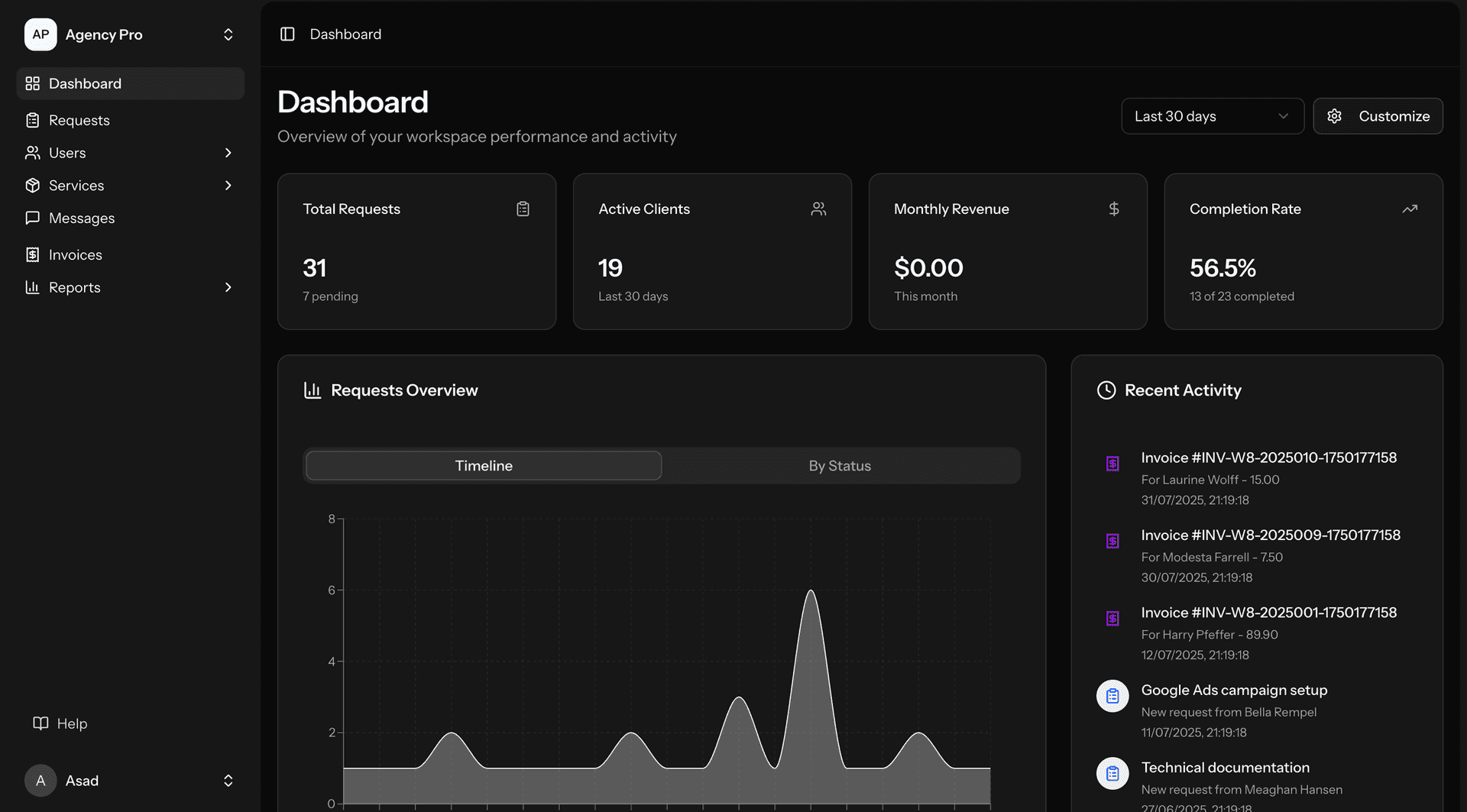
Identity and entitlements. Identity, role and billing-plan entitlements with revocation enforced server-side across all access paths. Quotas and usage caps enforced server-side. Versioned model and retrieval permissions per tenant.
Stripe billing integration
Stripe lifecycle. Customer, subscription, invoice and payment state management. Webhook verification against the raw unmodified payload using the correct endpoint-specific secret and signed timestamp recency. Receiver-side deduplication of both event identifiers and actual business effects, with durable billing-ledger and entitlement state changes committed atomically in the application's transaction boundary, separate from outbound Stripe API endpoint idempotency keys. No exactly-once delivery or chronological ordering assumption. Signature validation alone is not replay-proof; duplicates and out-of-order events require explicit handling. After uncertain external outcomes, retrieve the current Stripe object, reconcile against the billing ledger, quarantine conflicting events and proceed only after reconciliation before approved retry.
ZAR and multi-currency. South African rand pricing for domestic customers. USD for international and pan-African customers. VAT at 15 percent where applicable. Multi-currency for cross-border billing.
Subscription management. Trials, upgrades, downgrades, proration, cancellations, refunds, tax, invoice, currency and usage caps are chosen documented business rules with server-side enforcement.
AI model management
Multilingual evaluation. Task-specific held-out evaluation on actual agricultural, financial and healthcare tasks. Evaluation for agreed audience languages. Evaluated accuracy does not itself expand credit or clinical authority.
Prompt injection defence. AI features processing user input or retrieved content implement prompt injection defence. Safety escalation for high-consequence actions. Human approval before externally irreversible actions.
Pan-African expansion
Cape Town SaaS companies building for African markets need multi-market architecture.
Multi-market data. Per-tenant data residency configuration. South African tenants on Cape Town infrastructure. Nigerian, Kenyan and other African market data requirements considered.
Mobile-first. African markets are predominantly mobile. AI SaaS products need mobile-first design and API-first architecture for mobile app integration.
Payment diversity. African markets use diverse payment methods including M-Pesa, mobile money, bank transfer and card. Multi-payment integration architecture agreed per expansion scope.
Data pipeline architecture
Agricultural data. Farm sensor data, satellite imagery and weather data for crop analytics. Supply chain data from agricultural markets and logistics.
Financial data. Transaction data for FIC compliance. Payment data integration for South African payment systems.
Healthcare data. Clinical data with appropriate anonymisation. Public health data integration where authorised.
API-first design
Cape Town enterprise buyers expect API-first architecture. Public REST or GraphQL API with comprehensive documentation. Webhook delivery for event notifications. Developer sandbox for integration testing. Rate limiting and authentication with enterprise SSO support.
Deployment and infrastructure
Infrastructure. Containerised microservices with CI/CD pipeline. Staging environment mirroring production. Blue-green deployment. Database migrations tested before production. Backup and restore verified for agreed workload.
Monitoring. Application performance monitoring, error tracking, log aggregation and alerting. AI model performance dashboards. Infrastructure resilience monitoring for connectivity variation.
Illustrative Example
Hypothetical: Cape Town fintech building credit intelligence SaaS
A Cape Town fintech company plans an AI-powered credit intelligence SaaS platform. Target customers are lenders wanting alternative credit scoring using non-traditional data sources for credit-thin populations.
Growth-stage AI SaaS development would implement multi-tenant architecture with per-lender data isolation. AI-powered credit scoring using alternative data with documented lawful access and data rights for each data source. FIC accountable institution compliance support. Stripe billing with ZAR and USD pricing. POPIA compliance.
Assumptions: sufficient alternative data with documented lawful basis for model training, lenders willing to adopt alternative scoring through SaaS under agreed terms, Stripe merchant account eligibility confirmed for the specific entity and country and pilot lenders available for scoring quality evaluation. Credit decision authority remains with the lender under approved scope; the SaaS provides scoring support, not autonomous credit determination. Residual risks include scoring accuracy across population segments, lender adoption timelines, POPIA regulatory evolution, connectivity reliability and credit market conditions. No guarantee of specific default rate prediction accuracy, portfolio performance, customer acquisition rate or financial inclusion outcomes.
This is a hypothetical scenario for illustration. Actual scope, timeline and cost depend on your requirements.
Cost and timeline
AI SaaS platform development follows the published cost guide. These are initial scope-dependent planning ranges covering data rights, integrations, security, evaluation and procurement reviews, not guaranteed delivery or ongoing operational retainer.
| Tier | Range | Timeline | Scope |
|---|
| SaaS MVP | $30K to $60K | 8 to 14 weeks | Core AI features, basic subscription billing, simple dashboard |
| Growth-Stage SaaS | $60K to $150K | 14 to 28 weeks | Multi-tenant, usage billing, team workspaces, API access |
| Enterprise SaaS | $150K to $250K | 28 to 40 weeks | SSO/SAML, audit logging, compliance controls, custom workflows |
| Complex Enterprise | $250K to $300K+ | 40 to 52+ weeks | Marketplace, multi-region, AI/ML pipelines, SOC 2 readiness |
2026 US SaaS benchmark
The published cost guide's vendor comparison reflects a growth-stage multi-tenant SaaS with Stripe subscription billing, team workspaces, admin panel and a public API. These are 2026 US-buyer planning illustrations from the guide, not an independent empirical survey or local provider quote. Actual scope, compliance layers, integration count and AI model complexity shift both cost and timeline.
| Vendor route | Published range | Published timeline |
|---|
| Freelancer (Upwork/Toptal) | $20K to $60K | 4 to 9 months |
| Offshore agency | $35K to $90K | 5 to 9 months |
| Nearshore agency (LATAM) | $55K to $140K | 4 to 7 months |
| US/EU agency (ZTABS tier) | $70K to $200K | 4 to 7 months |
| In-house team (2 eng + PM) | $450K to $650K/yr | 8 to 14 months ramp |
SOC 2 Type II readiness adds $25K to $60K as a planning allowance where applicable, irrespective of vendor route. This is preparation for an independent CPA attestation engagement covering selected Trust Services Criteria for the defined system and observation period, not a software certification or automatic legal obligation. Stripe transaction fees are account, country and product dependent; the 2.9% + 30 cents figure is a labelled illustrative US domestic-card example, not a universal international merchant fee. Ongoing hosting, model inference, data storage, support tooling and third-party licensing costs are separate from build cost.
Need help scoping your Cape Town AI SaaS budget?
Share your Cape Town market scope, fintech or agriculture requirements and African expansion plans. We provide a scoped estimate based on multi-tenant architecture complexity and South African regulatory requirements.
Proposal evaluation criteria
When evaluating AI SaaS development proposals, assess these six criteria against your specific requirements.
| # | Criterion | What to verify |
|---|
| 1 | Scope and delivery ownership | Defined deliverables, milestones, acceptance criteria and IP assignment. Who owns the production codebase, infrastructure accounts and deployment pipeline after engagement. Exit terms covering data export, code handover and infrastructure transfer. |
| 2 | Tenant and security boundary evidence | Demonstrated multi-tenant isolation at database, cache, queue, AI model and export levels. Artifact lifecycle including async jobs, vector indexes, support logs and training data access. Revocation, retention and deletion procedures. SOC 2 readiness approach where applicable. |
| 3 | Billing and integration failure handling | Stripe webhook verification against raw unmodified payload with endpoint-specific secret and signed timestamp recency. Receiver-side deduplication of event identifiers and business effects, with atomic ledger and entitlement updates in the application transaction boundary, distinct from outbound idempotency keys. Recovery quarantines conflicting events and reconciles against current Stripe object state before retry. Payment retry limitations and third-party API error handling. |
| 4 | Agent evaluation and approved action authority | Held-out evaluation methodology on domain tasks, model version tracking, prompt change approval process, rollback procedures and production monitoring. Customer-approved scope for consequential actions. Engineering interlocks for safety-critical operations. Evaluation does not guarantee prevention of hallucination or earn autonomous authority. |
| 5 | Full recurring and third-party cost transparency | AI inference hosting, Stripe fees, transactional email, monitoring, support tooling, data storage, third-party API licences and renewal costs. SOC 2 readiness planning allowance and independent CPA attestation engagement cost where applicable. |
| 6 | Human delivery, training, validation and support | Agreed staff working languages for project communication, documentation and deliverable review. Product localisation capability is distinct from native-speaking delivery staff. Trainer, validator and support personnel responsibilities allocated between customer and provider. On-site availability agreed per engagement scope or separately resourced. Translation and documentation-language ownership where applicable. |
How delivery works
ZTABS is remote-first by design from our Houston, Texas office. Houston is Central time, 7 to 8 hours behind Cape Town SAST depending on US daylight saving time. We agree on overlapping work hours during project setup.
Discovery and architecture. Market analysis, technical architecture, multi-tenancy design and billing strategy. AI model evaluation. POPIA and FIC compliance mapping.
Core platform. Authentication, multi-tenancy, dashboard, API and core AI features. Stripe billing with ZAR support. Tenant isolation testing.
Launch. CI/CD pipeline, monitoring, staging and production deployment. POPIA compliance verification. Security audit for SOC 2 readiness where applicable.
White-label AI products
ZTABS builds custom white-label AI products for clients to brand and resell. Cape Town companies can commission white-label platforms for distribution under their own brand across African markets.
SOC 2 and compliance readiness
SOC 2 scope. SOC 2 Type II is an independent CPA attestation covering selected Trust Services Criteria for the defined system and observation period. It is not a software certification or blanket legal obligation. Building compliance controls during development costs less than retrofitting.
AI cost management
AI inference costs affect SaaS unit economics. Multilingual NLP processing for agreed audience languages requires appropriate model capacity. Tiered model selection optimises cost. Caching and batching reduce per-request costs. Usage-based pricing aligns AI costs with customer value.
Full stack considerations
AI model hosting costs scale with inference volume. Stripe fees separate from build cost. Full stack includes logs, backups, subprocessors, support, training data governance, retention policies, permission models and data transfer provisions. FIC compliance costs apply separately where relevant.
When ZTABS is not the right fit
These describe the boundaries of this proposed AI SaaS engagement, not company-wide limitations.
- No design partner signed yet. Validate demand before committing to platform build.
- Simple internal tool. SaaS multi-tenant architecture overhead is not justified for single-tenant internal use.
- On-site embedded team required for this engagement. ZTABS is remote-first by design. On-site resources are separately agreed and resourced where required.
- FIC regulatory advisory. This engagement builds platforms. Regulatory interpretation is a separately engaged qualified professional service.
- Ongoing managed operations. Post-launch hosting, monitoring and support retainers are separately scoped engagements.
Risks and mitigations
Multi-tenant isolation. Tenant data leakage critical in fintech. Isolation verified at all levels.
Infrastructure reliability. Cloud hosting mitigates local infrastructure challenges. Application resilience for connectivity variation.
Pan-African complexity. Each African market has distinct regulatory and infrastructure requirements. Architecture supports per-market configuration.
Ready to build your Cape Town AI SaaS platform?
Share your AI requirements, African market scope, billing model and compliance needs. We scope the architecture from multi-tenant isolation through Stripe ZAR billing to POPIA and FIC requirements.